
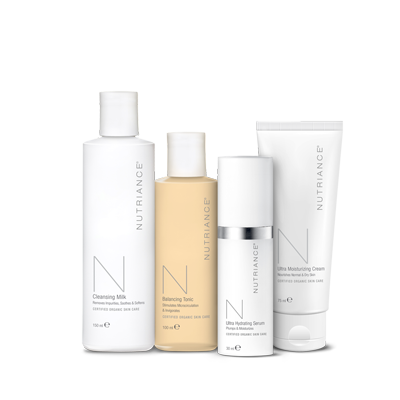
Nutriance Organic Skincare Ingredients: How European Customers Can Read and Understand Product Labels
Introduction
Choosing skincare products can be confusing when you see long ingredient lists, unfamiliar scientific names and claims such as “natural,” “organic,” “hydrating” or “anti-ageing.”
Understanding product labels can help you compare skincare options, identify ingredients you may need to avoid and select products that fit your routine.
For European customers exploring Nutriance Organic Skincare, learning how to read cosmetic labels is an important step before purchasing or introducing a new product.
At NewLife Health Vitamins, you can explore available products and ask about current product information, prices and delivery options.
This guide explains how to interpret skincare labels without relying on marketing claims alone.
1. Why Skincare Ingredient Lists Matter
A skincare product’s ingredient list provides information about the substances used in its formulation.
Reading it can help you:
- Identify ingredients that have caused reactions in the past.
- Check whether a product contains fragrance.
- Compare different cosmetic products.
- Understand basic product information.
- Make more informed purchasing decisions.
- Follow relevant warnings and instructions.
An ingredient list does not tell you everything about how a product will perform. The overall formulation, ingredient concentrations, product stability and your individual skin can all influence your experience.
Two products containing some of the same ingredients may not perform identically.
2. What Does INCI Mean on a Skincare Label?
European cosmetic ingredient lists commonly use INCI, which stands for International Nomenclature of Cosmetic Ingredients.
INCI names provide a standardised way to identify cosmetic ingredients across markets.
You may see familiar names alongside scientific or Latin-based names. This does not automatically mean an ingredient is harmful or unusual; standardised naming helps identify the substances in the product.
When reviewing a Nutriance Organic Skincare product, check the ingredient list on its current packaging rather than relying on an old online description.
Formulations and labelling can change, and information may differ between markets.
3. How to Read the Order of Ingredients
Cosmetic ingredients are generally listed in descending order of weight when they are added to the product, subject to specific regulatory rules and exceptions.
In practice, ingredients near the beginning of the list often make up a larger proportion of the formula.
However, the list has limitations:
- Ingredient order does not reveal the exact concentration of every ingredient.
- Ingredients used at low concentrations may appear near the end.
- Certain ingredients are subject to specific listing rules.
- A product’s performance cannot be determined from ingredient order alone.
For example, seeing an ingredient near the beginning of a list does not automatically prove that a product is more effective than another product with that ingredient lower down.
Read the entire list and consider the product’s intended use.
4. Common Types of Skincare Ingredients
Understanding broad ingredient categories can make product labels easier to interpret.
Cleansing ingredients
Cleansing ingredients help remove dirt, oil, makeup or other material from the skin.
Different cleansers are formulated for different purposes. If your skin feels uncomfortable or excessively dry after cleansing, consider whether the product suits your skin type.
Humectants
Humectants help attract water to the skin’s outer layers. Glycerin is a common example used in moisturising products.
The overall moisturising effect depends on the complete formula and how the product is used.
Emollients
Emollients help soften and smooth the skin. They may improve the feel of dry or rough areas.
Occlusive ingredients
Some ingredients help reduce water loss from the skin by forming a protective layer. Their suitability depends on the product, your skin and your preferences.
Fragrance ingredients
Fragrance can contribute to a product’s scent, but some people are sensitive to particular fragrance ingredients.
If you have a known fragrance allergy or sensitivity, check the label carefully and ask a healthcare professional for guidance when necessary.
These categories are general examples, not a claim that any specific Nutriance Organic product contains a particular ingredient.
5. Does “Organic” Mean a Skincare Product Is Better?
The word organic can influence how customers perceive skincare, but it should not replace careful label reading.
A product described as organic is not automatically:
- Suitable for every skin type.
- Free from potential allergens.
- Fragrance-free.
- Clinically proven to produce a particular result.
- More effective than every conventional cosmetic product.
- Certified under a particular organic standard.
The meaning of a product claim depends on the specific wording, evidence and applicable rules.
If organic certification matters to you, look for the relevant certification details and verify them with the named certification organisation. Do not assume a certification exists simply because the product name includes the word “organic.”
For an overview of cosmetic regulation in Europe, consult the European Commission’s cosmetics information.
6. How to Choose Skincare for Your Skin Type
The same product may feel different on different people. Consider your skin’s needs before purchasing.
Dry skin
Dry skin may feel tight, rough or flaky. You may prefer products intended for dry skin and a moisturiser that helps maintain skin comfort.
Oily skin
Oily skin may develop a noticeable shine. Look for products labelled as suitable for oily skin, but avoid harsh cleansing intended to remove all natural oil.
Combination skin
Combination skin may be oily in some areas and dry in others. A balanced routine can help you adjust your choices according to how different areas feel.
Sensitive skin
If your skin reacts easily, review ingredients carefully and introduce products gradually. A “natural” or “organic” claim does not guarantee that a product will be suitable for sensitive skin.
Mature skin
Skin may become drier or change in texture over time. Choose products according to your actual needs rather than assuming you must use a particular anti-ageing range.
If you experience persistent redness, itching, painful irritation or recurring rashes, seek advice from a qualified healthcare professional.
7. Understanding Skincare Claims
Product labels and advertisements may describe cosmetic benefits. It is important to understand what those claims do—and do not—mean.
“Hydrating” or “moisturising”
These terms generally indicate that a product is intended to help improve skin hydration or comfort. The results depend on the formulation and individual use.
“Anti-ageing”
This is a broad marketing term that can refer to products intended to improve the appearance of fine lines, dryness or uneven skin tone. It does not mean that a product stops natural ageing.
“Natural”
This term does not automatically guarantee safety, purity or suitability for sensitive skin.
“Dermatologically tested”
This wording should not be interpreted as a guarantee that a product will work for everyone or never cause irritation. If the testing method or results matter to you, look for supporting product information.
“Clinically proven”
Look for details about the claim and the evidence supporting it. Do not assume that every advertised benefit has been independently established.
When choosing Nutriance Organic Skincare, focus on the current product information and realistic expectations.
8. Important Information on European Cosmetic Labels
European cosmetic products are subject to requirements under applicable EU legislation, including Regulation (EC) No 1223/2009.
Depending on the product and applicable requirements, label information may include:
- The responsible person.
- The product’s intended function, where it is not obvious.
- The nominal content.
- Precautions and directions for use.
- Batch identification.
- Ingredient information.
- The date of minimum durability or period-after-opening information, where applicable.
Some requirements and exceptions depend on the type of product and packaging. Do not assume every label will display every item in exactly the same way.
You can review the EU Cosmetics Regulation for further information.
If you are buying a product from outside your country, check that the product is appropriate for your market and that the supplied information meets the applicable requirements.
9. How to Check a Nutriance Organic Product Before Ordering
Before placing an order, use this checklist.
<list marker=”number” gap={2}> <list-item>**Confirm the product name.** Make sure the item matches what you want to purchase.</list-item> <list-item>**Review the current ingredients.** Check for known allergies or sensitivities.</list-item> <list-item>**Read the instructions.** Understand how and where the product should be applied.</list-item> <list-item>**Check the packaging.** Review warnings, storage details and product identification information.</list-item> <list-item>**Ask about formulation changes.** If you have used the product before, do not assume its ingredients are unchanged.</list-item> <list-item>**Confirm availability and delivery.** Ask about current stock, pricing and delivery arrangements for your country.</list-item> </list>
You can visit NewLife Health Vitamins to enquire about available products.
10. Patch Testing and Safe Product Use
Even when a product’s ingredients look suitable, your skin may react to it.
When trying a new skincare product:
- Read the product instructions and warnings.
- Follow any patch-testing directions provided by the manufacturer.
- Introduce the product gradually.
- Monitor your skin for unexpected redness, itching, swelling or burning.
- Stop using the product if irritation develops.
Patch testing cannot guarantee that a product will never cause a reaction.
Do not apply products in ways that contradict their instructions. If you experience a persistent or severe reaction, seek appropriate medical advice. Difficulty breathing or swelling of the throat requires emergency medical attention.
11. Common Mistakes When Reading Skincare Labels
Focusing only on the first ingredient
The whole formula matters. Read the complete ingredient list and product instructions.
Assuming unfamiliar names are dangerous
Many cosmetic ingredients have scientific or standardised names. An unfamiliar name alone is not proof that an ingredient is harmful.
Assuming natural means allergy-free
Plant-derived ingredients can still cause allergic reactions or irritation.
Choosing products based only on popularity
A product that suits one person may not suit another. Consider your skin type, sensitivities and intended use.
Ignoring warnings
Always read the product’s precautions and directions before use.
Trusting every online ingredient list
Online information may be outdated. Where possible, use the ingredient list on the current product packaging.
Frequently Asked Questions
1. How can I check the ingredients in Nutriance Organic Skincare?
Check the ingredient list on the current packaging of the specific product. If you need clarification, ask the seller for current product information.
2. Are organic skincare products always safe?
No cosmetic product is guaranteed to suit everyone. Organic wording does not eliminate the possibility of irritation or allergic reactions.
3. What does INCI mean?
INCI stands for International Nomenclature of Cosmetic Ingredients. It is a standardised naming system used on cosmetic ingredient lists.
4. Does a longer ingredient list mean a product is worse?
No. The length of an ingredient list alone does not establish whether a product is good, bad or suitable for your skin.
5. How do I know if a skincare product is suitable for sensitive skin?
Review its ingredients, check for known triggers and follow any patch-testing instructions. If you have recurring skin reactions, seek professional advice.
6. Can skincare ingredients treat skin diseases?
Cosmetic products should not automatically be considered treatments for medical skin conditions. Consult a qualified healthcare professional about persistent or concerning symptoms.
7. Where can I ask about Nutriance Organic Skincare in Europe?
Visit NewLife Health Vitamins or contact Rafiya through WhatsApp to enquire about current product availability, prices and delivery options.
Explore Nutriance Organic Skincare at NewLife Health Vitamins
Understanding ingredient lists can help you choose skincare more confidently. Read the label, consider your skin’s needs, introduce unfamiliar products cautiously and avoid relying on marketing claims alone.
If you are interested in Nutriance Organic Skincare, check the current product details and confirm availability before placing an order.
Visit NewLife Health Vitamins to explore available products.
Prefer to order through WhatsApp? Contact Rafiya at +39 380 264 7686 using this WhatsApp link.
Information to Include When Ordering
Please provide:
- Name
- Telephone number
- Preferred delivery date
- Address and pick-up location
Send your order details to Rafiya on WhatsApp.
Product availability, formulations, prices and delivery arrangements may vary by country. Confirm these details before ordering.
Disclaimer
This website is operated by an independent distributor and is not the official NeoLife corporate website unless expressly stated. It is not endorsed by or affiliated with Google or Facebook/Meta. This article is for general educational purposes and is not a substitute for personalised medical advice, diagnosis or treatment. Skincare cosmetics should not be assumed to treat medical skin conditions. Always read and follow product instructions, discontinue use if irritation occurs, and consult an appropriate healthcare professional if you experience persistent or severe symptoms.